Millions of people wear contact lenses every day for clear, glasses-free vision. But here is the truth: most contact lens wearers unknowingly make daily habits that put their eyes at serious risk.
From skipping hand washing to sleeping with lenses in, these contact lens care mistakes can lead to painful eye infections, corneal damage, and even vision loss.
Whether you are a new wearer or have used lenses for years, this guide covers the most dangerous contact lens hygiene mistakes and exactly how to fix them. Your eyes deserve better care than you might think.
Why Contact Lens Hygiene Mistakes Are More Dangerous Than You Think
It is easy to treat contact lenses as a simple everyday accessory. But they are medical devices that sit directly on the surface of your eye, one of the most sensitive and exposed organs in your body. Poor contact lens hygiene creates the perfect conditions for bacteria, fungi, and parasites to thrive.
According to the CDC, up to 99% of contact lens wearers admit to at least one risky habit. The consequences can range from mild irritation to serious eye infections like microbial keratitis, a corneal infection that can cause permanent scarring and vision loss if left untreated.
Even one small mistake, done repeatedly, can cause contact lens-related eye damage that takes months to heal, or may not fully heal at all.
Mistake 1: Sleeping in Contact Lenses – A Leading Cause of Contact Lens Eye Infection
This is one of the most common and most dangerous contact lens care mistakes. Many people fall asleep with their lenses in, thinking one night will not hurt. But the risks add up fast.
Why Sleeping in Contacts Is Harmful to Corneal Health
When you sleep, your eyelids are closed, and your cornea receives far less oxygen than when your eyes are open. Wearing contact lenses during sleep reduces this oxygen supply even further.
This hypoxic (low-oxygen) environment encourages bacterial growth and significantly raises the risk of microbial keratitis, an infection that can leave permanent corneal scars.
- Sleeping in lenses increases the risk of contact lens-related eye infection by up to 6 to 8 times.
- Even FDA-approved extended-wear lenses carry a higher infection risk when worn overnight.
- Dry eyes from contact lenses worsen significantly with overnight wear
- Bacteria trapped under the lens during sleep can cause ulcers within hours
Fix: Set a phone alarm at bedtime as a reminder to remove your lenses. Your eyes need to breathe overnight.
Blurry vision can happen for many reasons, from dry eyes to serious eye conditions. Find out more in Why Are My Eyes Blurry?.
Mistake 2: Poor Contact Lens Hygiene – Not Washing Hands Before Handling Lenses
One of the simplest contact lens hygiene mistakes is also one of the most overlooked.
Hands pick up bacteria, viruses, oils, and dirt throughout the day, and all of that transfers directly to your lens and your eye if you do not wash up first.
The Right Way to Handle Contact Lenses Safely
Proper handwashing is the single most effective step in preventing contact lens-related eye damage. Here is what eye care specialists recommend:
- Wash your hands with soap and water for at least 20 seconds before inserting or removing lenses
- Dry your hands with a clean, lint-free towel before touching lenses; moisture from hands can introduce microbes
- Avoid handling lenses right after cooking, using lotion, or applying makeup
- Never transfer lenses from one eye to another using fingers without rewashing
Mistake 3: Using Water to Clean Contact Lenses – A Dangerous Contact Lens Safety Risk
This contact lens care mistake is shockingly common, especially when the lens solution runs out.
Using tap water, bottled water, or even distilled water to rinse, store, or clean contact lenses feels harmless, but it is genuinely dangerous.
Why Water and Contact Lenses Should Never Mix
Tap water, even in a city like Bangalore, can contain a microorganism called Acanthamoeba, a parasite that causes Acanthamoeba keratitis, one of the most painful and difficult-to-treat eye infections known to ophthalmologists.
Water also contains minerals and chemicals that can permanently alter the shape of soft lenses.
- Acanthamoeba keratitis can attach to lenses within seconds of water contact.
- Chlorine in swimming pools does NOT kill all lens-damaging microbes
- Saline solution alone is not a substitute for a proper disinfecting solution; it does not kill bacteria
- Never shower, swim, or use a hot tub while wearing contact lenses
Fix: Always carry a travel-sized contact lens solution. Never substitute with water under any circumstances.
Mistake 4: Overwearing Contact Lenses Past Their Replacement Schedule
Every pair of contact lenses, whether daily, bi-weekly, or monthly, has a replacement schedule for a very specific reason.
Wearing lenses beyond their intended lifespan is a contact lens care mistake that many users make to save money, but the cost to eye health can be far greater.
What Happens When You Overwear Contact Lenses
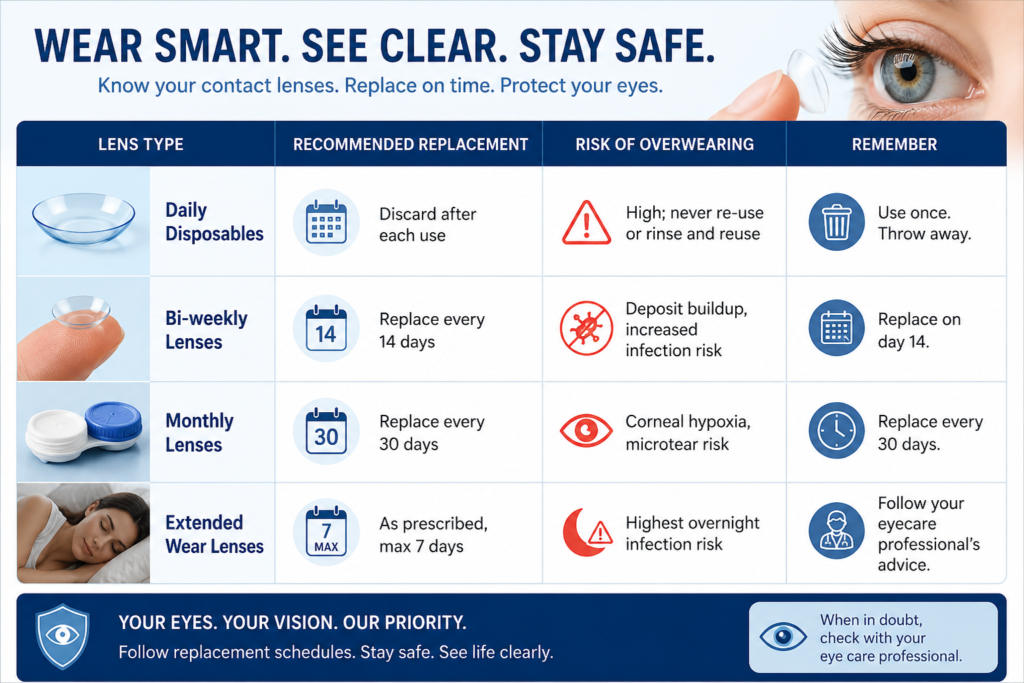
As lenses age, protein and lipid deposits from your tears build up on their surface. This creates a rougher texture, reduces oxygen permeability, and becomes a breeding ground for bacteria.
Extended overwearing causes microscopic scratches on the cornea, leading to contact lens-related eye damage that may not be immediately visible.
| Lens Type | Recommended Replacement | Risk of Overwearing |
| Daily disposables | Discard after each use | High; never re-use or rinse and reuse |
| Bi-weekly lenses | Replace every 14 days | Deposit buildup, increased infection risk |
| Monthly lenses | Replace every 30 days | Corneal hypoxia, microtear risk |
| Extended wear lenses | As prescribed, max 7 days | Highest overnight infection risk |
Sudden changes in eyesight should never be ignored. Learn when blurry or lost vision becomes serious in Sudden Vision Loss: When Is It an Emergency?.
Mistake 5: Ignoring Contact Lens Discomfort, Pain, or Redness
Pain, burning, redness, or blurred vision with contact lenses are your eyes telling you something is wrong.
Ignoring these contact lens discomfort symptoms and pushing through the day is a dangerous mistake that delays treatment and worsens outcomes.
Red Flag Symptoms That Need Immediate Attention
If you experience any of the following, remove your lenses immediately and consult an eye specialist:
- Sudden redness or persistent eye irritation from lenses
- Unusual light sensitivity (photophobia) with lenses in
- Discharge, crusting, or sticky eyelids after lens wear
- Blurred vision that does not clear after blinking
- A sensation of something stuck in the eye that does not resolve
Warning: Never try to ‘push through’ contact lens pain. What feels like minor irritation could be the early stage of a corneal ulcer or microbial keratitis.
Mistake 6: Not Replacing the Contact Lens Case – A Forgotten Contact Lens Hygiene Step
Most people focus on cleaning the lenses themselves and completely forget about the case.
But a contaminated contact lens case is one of the leading sources of eye infections in lens wearers. The lens case is where bacteria and biofilms quietly grow between uses.
How to Clean and Replace Your Contact Lens Case Correctly
- After each use, rinse the case with fresh contact lens solution; never use water.
- Let the case air-dry upside down on a clean tissue with the caps off
- Never wipe the inside of the case with a cloth or tissue; this spreads bacteria
- Replace your lens case every 1 to 3 months, even if it looks clean
- When buying a new lens solution, get a new case at the same time
Mistake 7: Wearing Contact Lenses With Eye Makeup – Risks and Best Practices
Millions of contact lens wearers also use eye makeup daily.
But the combination of cosmetics and contact lenses creates multiple opportunities for contamination, chemical irritation, and contact lens-related eye damage, especially when the wrong application order is followed.
Contact Lens and Eye Makeup: What Eye Specialists Recommend
- Always insert contact lenses before applying makeup, not after
- Remove lenses before removing makeup to avoid transferring product to lenses
- Avoid applying eyeliner on the inner rim of the eye (waterline); it directly contaminates the lens
- Replace mascara and eyeliner every 3 months to prevent bacterial buildup
- Use oil-free, ophthalmologist-tested makeup products to reduce lens contamination
- Never sleep in makeup while wearing lenses, double the risk, double the damage
Planning for LASIK? Don’t miss our complete checklist on How to Choose the Right LASIK Surgeon in Bangalore before making your decision.
Get a Professional Contact Lens Check-Up at Seedi Eye Care Centre, Bangalore
If you wear contact lenses in Bangalore, regular professional check-ups are not optional; they are essential. Many contact lens-related eye problems develop silently, without obvious symptoms, and are only detected through a thorough clinical examination.
Seedi Eye Care Centre in Bangalore offers specialised contact lens consultations and comprehensive eye examinations to help lens wearers protect their vision long-term.
With experienced ophthalmologists and advanced diagnostic technology, Seedi Eye Care Centre assesses:
- Contact lens fit and corneal health using slit-lamp examination
- Corneal topography to detect early signs of lens-related damage or keratoconus
- Dry eye assessment and personalised lubricating drop recommendations
- Prescription review to ensure you are using the correct lens type and power
- Guidance on safe lens hygiene practices tailored to your lifestyle
Whether you are a new lens wearer or a long-time user experiencing discomfort, Seedi Eye Care Centre’s team is equipped to provide the right diagnosis and care.
Patients across Bangalore trust Seedi Eye Care Centre for transparent, patient-first eye care advice, without pressure or unnecessary procedures.
Tip: Eye specialists recommend a contact lens check-up at least once every 12 months. even if your eyes feel perfectly fine.
Quick Reference: Contact Lens Do’s and Don’ts for Safe Contact Lens Wear
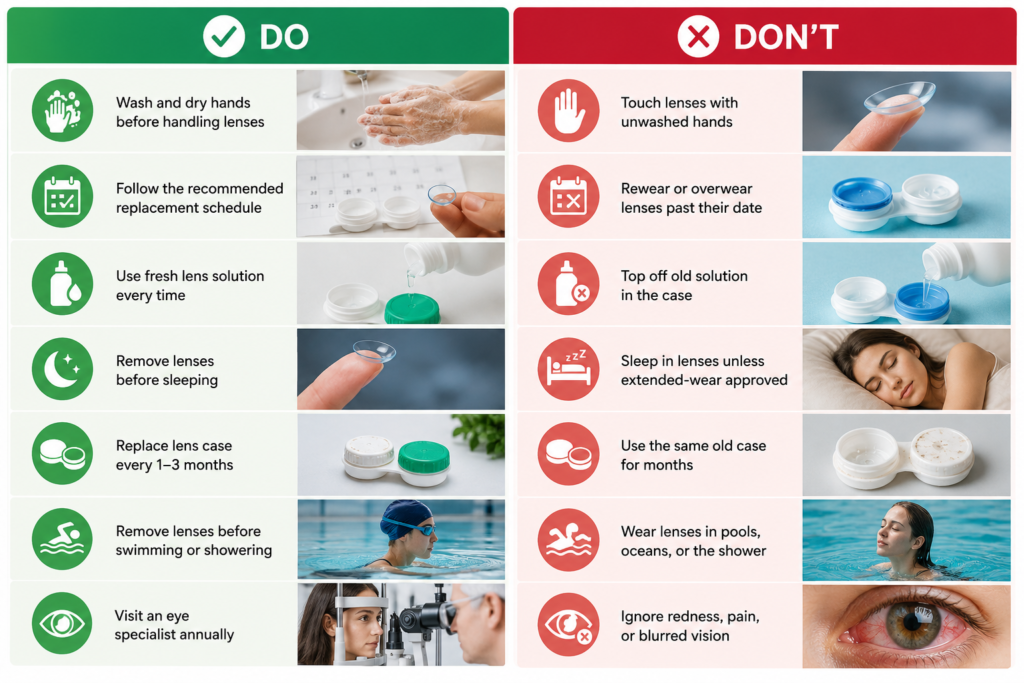
Here is a simple, at-a-glance guide to help you build better contact lens hygiene habits every day.
| DO | DON’T |
| Wash and dry your hands before handling lenses | Touch lenses with unwashed hands |
| Follow the recommended replacement schedule | Rewear or overwear lenses past their date |
| Use fresh lens solution every time | Top off the old solution in the case |
| Remove lenses before sleeping | Sleep in lenses unless extended-wear approved |
| Replace lens case every 1-3 months | Use the same old case for months |
| Remove lenses before swimming or showering | Wear lenses in pools, oceans, or the shower |
| Visit an eye specialist annually | Ignore redness, pain, or blurred vision |
Struggling to see clearly at night? Read our detailed guide on Night Vision Problems: Causes, Symptoms & Treatment to understand the causes, symptoms, and treatment options.
Conclusion: Small Habits Make a Big Difference
Contact lenses give you freedom and convenience, but only if used correctly. The contact lens care mistakes covered above are not rare exceptions; they are everyday habits that millions of wearers repeat without realising the damage being done.
From skipping handwashing to sleeping in lenses and ignoring eye irritation, each mistake carries a real risk of contact lens eye infection, corneal damage, or lasting vision loss.
Good contact lens hygiene takes less than two minutes a day. That small investment protects your eyes for a lifetime. If you wear contact lenses in Bangalore and have not had a professional eye check-up recently, now is the right time.
Book a consultation at Seedi Eye Care Centre and get personalised guidance from experienced eye specialists who put your vision first.
FAQs
1. How do you know if your eyes are damaged from contact lenses?
Persistent redness, blurry vision, burning sensation, excessive watering, or sensitivity to light can indicate contact lens-related damage. If symptoms continue even after removing the lenses, it may signal a corneal scratch or infection that needs immediate eye examination.
2. What is the 3-1-1 rule for contact lenses?
The 3-1-1 rule means replacing your contact lens case every 3 months, cleaning lenses with fresh solution daily, and never topping off old solution. Following this routine helps reduce bacterial buildup that can lead to serious eye infections.
3. Can you sleep for 3 hours with contact lenses on?
Even a short nap with regular contact lenses can reduce oxygen flow to the cornea and increase the risk of dryness, irritation, and infection. Unless your lenses are specifically approved for overnight wear, sleeping in them is not recommended.
4. Can you keep your eyes closed for 5 minutes while wearing contacts?
Closing your eyes briefly while wearing contacts is generally safe, but dryness may increase if lenses are already dehydrated or worn for long hours. If your eyes feel sticky or uncomfortable after reopening them, lubricating drops may be needed.
5. Is it risky to wear contact lenses every day?
Daily contact lens wear becomes risky when hygiene rules are ignored, lenses are overworn, or expired products are used. Poor lens care can lead to corneal ulcers, eye infections, and long-term vision complications if not treated early.