Retinal laser treatment is a specialized eye procedure used to treat various retinal conditions, including diabetic retinopathy, retinal tears, and macular edema. By using a precisely focused beam of light, it targets damaged areas of the retina to seal leaks, shrink abnormal vessels, and prevent vision from deteriorating further. When left untreated, retinal conditions can rapidly progress to permanent vision loss, making early intervention essential.
At Seedieye Care Centre, advanced retinal laser technology is used to provide safe and effective treatment for patients with retinal disorders. With a team of experienced retina specialists and state-of-the-art equipment, Seedieye Care Centre is dedicated to preserving and protecting your precious eyesight at every stage of treatment.
What Is the Retina and Why Is It Important?
Understanding the retina’s role in vision is essential to appreciating why protecting it matters so much. This delicate structure is far more complex than most people realise, and far more vulnerable.
The retina is a thin layer of light-sensitive tissue lining the back of the eye. When light enters your eye, the retina converts it into electrical signals that travel via the optic nerve to the brain, where they are interpreted as images. Without a functioning retina, vision simply cannot occur.
Any damage to the retina, whether from disease, injury, or aging, can disrupt this process and lead to partial or complete vision loss. Unlike some body tissues, the retina has very limited ability to repair itself, which is why timely intervention through retinal laser treatment is so critical.
Experiencing vision issues? Read Why Are My Eyes Blurry? to understand the common causes and when to seek treatment.
What Is Retinal Laser Treatment Used For?
Retinal laser treatment is not a single-purpose procedure; it is a versatile tool used to manage and prevent the worsening of several different eye conditions. Understanding which conditions it treats helps patients recognize when they might need it.
Retinal laser surgery is commonly recommended when a condition threatens the structural integrity of the retina or when abnormal blood vessels risk bleeding into the eye. The treatment stabilizes disease progression and reduces the risk of vision loss.
Conditions Treated With Retinal Laser Treatment
The following conditions are among the most frequently managed using laser treatment for the retina:
| Condition | How Laser Helps |
| Diabetic Retinopathy | Seals leaking vessels and destroys abnormal new vessels (neovascularization) |
| Retinal Tears or Holes | Creates a scar barrier around the tear to prevent full retinal detachment |
| Macular Edema | Reduces fluid buildup in the macula using focal laser application |
| Retinal Vein Occlusion | Treats swelling and reduces the risk of abnormal vessel growth after blockage |
| Peripheral Retinal Degeneration | Strengthens weak peripheral areas prone to tearing or detachment |
Specialists at Seedieye Care Centre carefully evaluate your specific retinal condition before recommending laser treatment, ensuring that the most appropriate and effective approach is selected for your individual needs.
How Does Retinal Laser Treatment Work?
The mechanism behind retinal laser treatment is precise and scientifically advanced. Rather than cutting or removing tissue, the laser uses controlled light energy to create targeted therapeutic effects on specific retinal cells and blood vessels.
Retinal laser treatment uses a focused beam of light to create tiny, controlled burns on the retina. These burns seal leaking blood vessels, destroy abnormal tissue, or form a protective scar barrier around tears, all without any incisions or general anaesthesia.
Procedure Overview: Step-by-Step
Here is what to expect during a standard retinal laser procedure at Seedieye Care Centre:
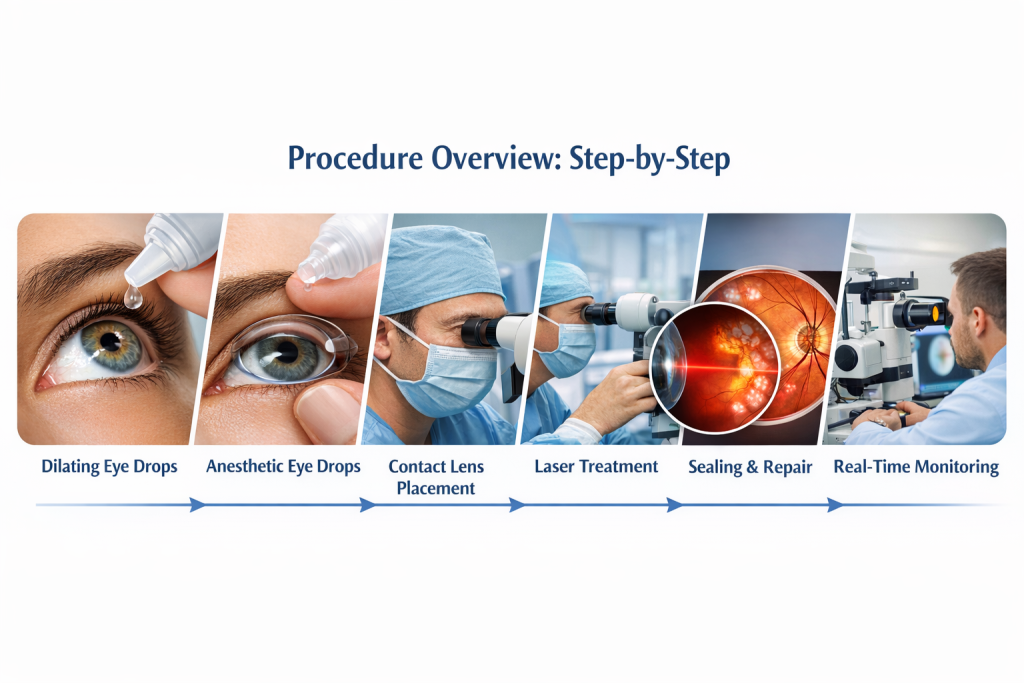
The entire process is highly precise and designed to minimize any damage to surrounding healthy retinal tissue. Most patients are comfortably seated throughout the procedure.
Types of Retinal Laser Treatments
Not all retinal conditions require the same laser approach. Different techniques are used depending on the location, severity, and nature of the retinal problem. Understanding the differences helps set the right expectations for treatment.
Focal Laser Treatment
Focal laser treatment is used when there are specific, localized areas of leakage or damage on the retina, most commonly in cases of diabetic macular edema.
Rather than treating the entire retina, the laser targets individual leaking blood vessels in a small, precisely defined zone.
- Best suited for: Macular edema, localized leaking vessels
- Goal: Reduce fluid buildup in the macula and protect central vision
- Session duration: Usually 10 to 20 minutes
Panretinal Photocoagulation (PRP)
Panretinal photocoagulation (PRP) is a more extensive form of laser treatment designed to address widespread retinal damage.
It is the standard of care for proliferative diabetic retinopathy, the advanced stage where abnormal new blood vessels grow across the retina.
- Hundreds to thousands of laser spots are applied across the peripheral retina
- The laser destroys oxygen-deprived peripheral tissue, reducing the signal that triggers abnormal vessel growth
- May be completed in one to three sessions, depending on severity
- Goal: Prevent vitreous hemorrhage and traction retinal detachment
Laser for Retinal Tears
When a retinal tear is detected, often during a routine dilated eye exam or following the sudden appearance of floaters and flashes, laser treatment can be used to seal it before it progresses to a full retinal detachment.
- A laser is applied in a ring around the tear to create a permanent adhesive scar
- This barrier prevents fluid from slipping under the retina and causing detachment
- The procedure is quick, typically completed in a single outpatient session
At Seedieye Care Centre, the appropriate laser technique is carefully selected based on each patient’s individual diagnosis, imaging findings, and disease stage.
Think lazy eye only affects kids? Discover effective solutions in Lazy Eye Amblyopia Treatment for Adults.
Benefits of Retinal Laser Treatment
One of the reasons retinal laser treatment has become the global standard for managing many retinal conditions is its impressive combination of effectiveness and safety.
It offers significant therapeutic benefits with minimal disruption to the patient’s daily life.
Key Benefits at a Glance
- Prevents vision loss: The primary goal is to halt disease progression before sight deteriorates further
- Slows disease progression: Particularly effective in diabetic retinopathy and vein occlusion management
- Minimally invasive: No incisions, no stitches, and no general anesthesia required
- Quick treatment time: Most procedures are completed in 10 to 30 minutes
- No hospitalization needed: Performed as an outpatient procedure
- High precision: Modern laser systems target affected tissue with sub-millimeter accuracy
- Proven long-term record: Decades of clinical evidence supporting its safety and effectiveness
Is Retinal Laser Treatment Painful?
Pain and discomfort are among the most common concerns patients raise before undergoing retinal laser treatment. The good news is that the procedure is very well tolerated by the vast majority of patients, with discomfort typically described as mild and brief.
Because anesthetic eye drops are applied before the procedure, the surface of the eye is completely numb. Patients do not feel the laser itself. What some may notice are sensations related to the pressure of the contact lens or the brightness of the laser light.
What You May Feel During the Procedure
- Mild stinging or pressure from the contact lens placed on the eye
- Temporary light sensitivity due to the bright laser delivery system
- Slight discomfort or an aching sensation with each laser pulse, more noticeable in PRP
- Brief flashes of light as the laser fires
Anesthetic eye drops are routinely used at Seedieye Care Centre to maximize patient comfort throughout the entire procedure. If discomfort is significant, your specialist can pause and reassess.
Recovery After Retinal Laser Treatment
One of the major advantages of retinal laser treatment is its relatively short recovery period. Unlike surgical procedures that require extended downtime, most patients are able to return to their normal routine within a day or two, though complete retinal healing takes longer.
Recovery Timeline
Post-Treatment Care Instructions
Following your retinal laser procedure, adhering to these care steps will support the best possible recovery:
- Avoid strenuous physical activities and heavy lifting for 3 to 5 days
- Use all prescribed eye drops as directed, typically anti-inflammatory drops
- Wear sunglasses when outdoors to reduce light sensitivity
- Avoid rubbing the treated eye
- Attend all scheduled follow-up visits at Seedieye Care Centre to monitor healing
- Report any sudden increase in floaters, pain, or vision change immediately
Struggling to see clearly at night? Don’t miss Night Vision Problems: Causes, Symptoms and Treatment | Seedieye Eye Care Center.
Risks and Side Effects
Retinal laser treatment has a strong safety profile and has been performed successfully for decades. However, like any medical procedure, it carries a small risk of side effects. Being informed about these helps patients make confident decisions about their care.
The vast majority of side effects are temporary and resolve as the eye heals. Serious complications are rare, especially when the procedure is performed by an experienced retinal specialist using modern equipment.
Possible Side Effects to Be Aware Of
- Temporary blurred vision: Common in the first 24 to 48 hours post-procedure
- Reduced night vision: Can occur after extensive PRP treatment due to peripheral retinal changes
- Mild swelling or redness: Usually resolves within a few days
- Peripheral vision changes: Rare, but possible with extensive panretinal treatment
- Increased floaters: Temporary increase as the eye adjusts following laser application
Experienced specialists at Seedieye Care Centre take every precaution to minimize risks, using the lowest effective laser energy settings and the most precise delivery systems available.
Who Needs Retinal Laser Treatment?
Retinal laser treatment is not required by everyone; it is recommended for specific patients whose retinal conditions pose a genuine risk of vision loss. Identifying the right candidates early makes a significant difference in treatment outcomes.
You may be a candidate for retinal laser surgery if you have one or more of the following:
- Diabetes that is affecting the blood vessels in your eyes (diabetic retinopathy)
- Retinal tears or areas of peripheral degeneration that risk progressing to detachment
- Abnormal blood vessel growth (neovascularization) threatening the retina or vitreous
- Swelling in the macula (macular edema), causing central vision blurring
- Retinal vein occlusion with secondary complications
Early diagnosis at Seedieye Care Centre is key to preventing serious complications. Many patients who receive timely laser treatment successfully preserve functional vision for years.
When Should You See an Eye Specialist?
Retinal conditions rarely cause pain in their early stages, making them easy to miss until significant damage has already occurred.
Knowing the warning signs and acting on them promptly is essential. Do not wait for vision to worsen before seeking evaluation.
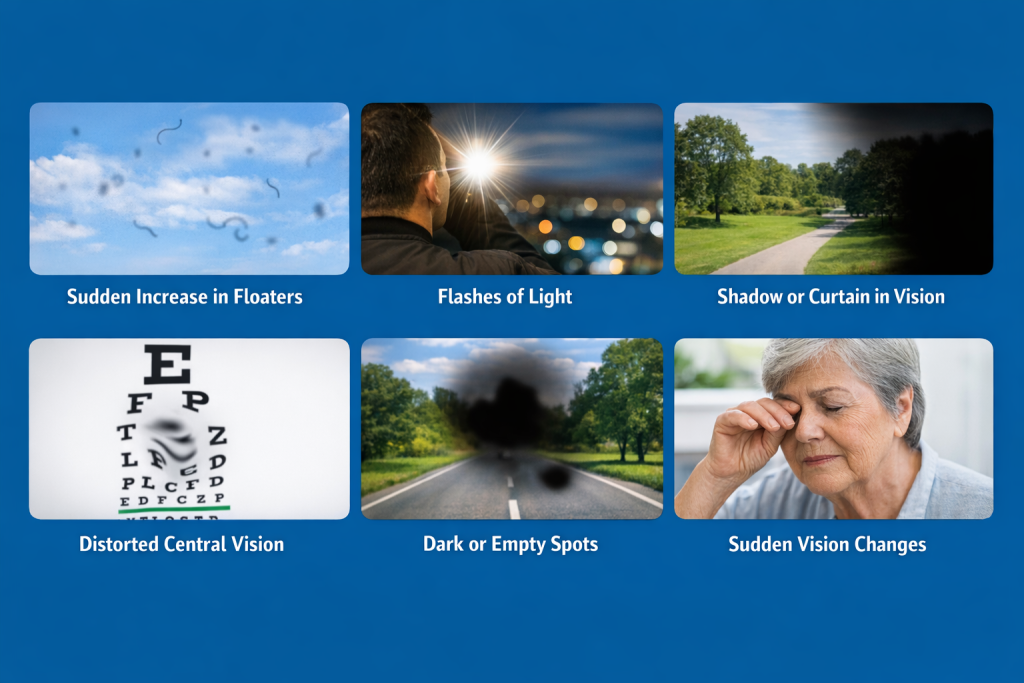
Prompt evaluation at Seedieye Care Centre can help preserve your eyesight. The sooner a retinal issue is identified, the more treatment options are available and the better the likely outcome.
Why Choose Seedieye Care Centre for Retinal Treatment?
Choosing the right eye care provider for retinal laser treatment is one of the most important decisions you can make for your vision. Seedieye Care Centre stands apart through its combination of clinical expertise, technology, and patient-focused care.
Seedieye Care Centre provides advanced retinal care with modern laser technology and a team of expert ophthalmologists who specialize in diagnosing and treating complex retinal conditions.
Key Advantages of Choosing Seedieye Care Centre
- Advanced laser equipment: Uses the latest generation of retinal laser delivery systems for maximum precision and safety
- Experienced retina specialists: A dedicated team with extensive training in diagnosing and treating all forms of retinal disease
- Personalized treatment plans: Every patient receives an individualized plan based on their unique diagnosis, imaging findings, and health history
- Comprehensive eye care services: From initial screening and diagnosis to laser treatment and long-term follow-up, all care is delivered under one roof
- Patient comfort focus: Friendly staff and a calm clinical environment designed to put patients at ease before, during, and after procedures
Wondering about screen protection? Explore Blue Light Glasses: Do They Really Protect Your Eyes? for expert insights.
Conclusion
Retinal laser treatment is a proven, effective, and safe procedure that plays a critical role in preventing vision loss caused by diabetic retinopathy, retinal tears, macular edema, and other serious retinal conditions. With its minimally invasive approach, short recovery time, and decades of clinical evidence behind it, laser treatment for the retina remains one of the most powerful tools available in modern eye care.
The key to the best outcomes is early diagnosis and timely intervention. Retinal conditions are progressive, the longer they go untreated, the more difficult they become to manage. If you are experiencing symptoms or have already been diagnosed with a retinal condition, do not delay. Visit Seedieye Care Centre today for expert guidance, comprehensive evaluation, and the most advanced retinal laser treatment available. Your vision is worth protecting.
FAQs | Retinal Laser Treatment
Is retinal laser treatment permanent?
Retinal laser treatment creates lasting changes to treated tissue, but it helps control the condition rather than cure it. Depending on the underlying disease, particularly in diabetic retinopathy, follow-up treatments may be required over time as the condition evolves.
How long does the retinal laser procedure take?
Most retinal laser procedures are completed within 10 to 20 minutes, though more extensive treatments such as panretinal photocoagulation may be spread across multiple sessions. The actual laser application itself is usually just a few minutes of the total appointment time.
Can vision improve after retinal laser treatment?
The primary goal of retinal laser treatment is to prevent further vision loss rather than to restore lost sight. However, some patients, particularly those treated for macular edema, do experience measurable vision improvement as retinal swelling reduces following the procedure.
Is hospitalization required for retinal laser treatment?
No, retinal laser treatment is performed as an outpatient procedure at Seedieye Care Centre. Patients arrive, receive treatment, and are typically able to go home within a few hours. There is no need for overnight hospital admission in the vast majority of cases.