LASIK eye surgery has helped millions achieve clear vision without glasses or contact lenses. Yet despite its proven track record, many people in Bangalore still hesitate, not because of real risks, but because of LASIK myths that have taken on a life of their own.
At Seedieye Care Centre, we meet patients every day who are unsure about LASIK because of outdated or incorrect information they have read online or heard from well-meaning friends. These LASIK safety myths can prevent people from exploring a life-changing procedure they are perfectly suited for.
This blog exposes the 10 most common laser eye surgery myths, sets the record straight with evidence-based facts, and helps you make a confident, informed decision about your vision.
Myth 1: LASIK Is Painful
Of all the LASIK myths circulating in Bangalore, the fear of pain is the most common reason patients delay or avoid the procedure.
The idea of a laser working on your eye understandably sounds frightening, but the reality is very different from what most people imagine.
The Truth: LASIK Is Virtually Painless
The question Is LASIK painful’ has a reassuring answer. Anaesthetic eye drops are applied before the procedure begins, completely numbing the eye.
During the treatment itself, patients typically report only a sensation of mild pressure lasting a few seconds, not pain.
- Numbing drops eliminate discomfort throughout the procedure
- The laser treatment itself takes only 20–30 seconds per eye
- Most patients are surprised by how comfortable the experience is
- Mild dryness or a scratchy sensation may occur for 24–48 hours after; this resolves quickly
Think LASIK fixes every vision issue? Learn more in Lazy Eye (Amblyopia) Treatment for Adults to understand what LASIK can’t correct.
Myth 2: LASIK Is Unsafe
LASIK safety myths are widespread online, often fuelled by rare case reports or sensationalised news stories.
This leads many Bangalore patients to believe the procedure is riskier than it actually is. The data tells a very different story.
The Truth: LASIK Has an Exceptional Safety Record
LASIK is one of the most extensively studied elective medical procedures in the world.
With over 40 million procedures performed globally, the evidence for its safety is overwhelming, particularly when performed by experienced surgeons using modern technology.
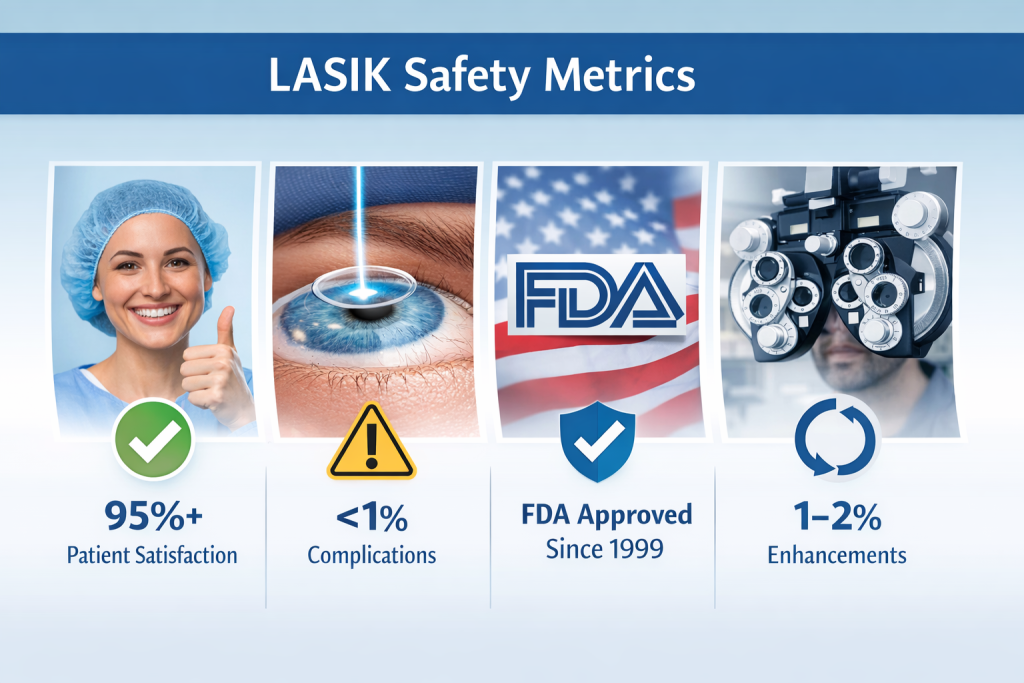
At Seedieye Care Centre, every patient undergoes a comprehensive pre-operative evaluation to confirm suitability before any procedure is recommended. This careful screening is a key reason for the centre’s high success rate.
Myth 3: LASIK Results Don’t Last Long
A widely held LASIK myth is that the correction wears off after a few years, forcing patients to return for repeated procedures.
This misunderstanding stops many people from viewing LASIK as a worthwhile investment.
The Truth: LASIK Provides Long-Lasting Vision Correction
The corneal reshaping performed during LASIK is permanent. The structural change to your cornea does not reverse or degrade over time.
What can change is your natural eye, which continues to age, but this is biology, not a LASIK failure.
- The correction itself is permanent and does not ‘fade’
- Presbyopia (age-related near vision difficulty after 40) is a natural process unrelated to LASIK
- Myopia may rarely progress in younger patients whose prescription was not yet stable, which is why Seedieye screens for prescription stability before surgery
- The majority of patients enjoy clear distance vision for decades after a single procedure
Myth 4: Everyone Can Get LASIK
Some patients come to Seedieye believing that LASIK is a universal solution available to anyone who wears glasses.
While LASIK is suitable for a large number of people, candidacy depends on several individual eye health factors.
The Truth: Suitability Requires a Thorough Evaluation
Candidacy for LASIK is determined through a detailed pre-operative assessment. Not meeting criteria does not mean vision correction is out of reach; it simply means a different procedure may be more appropriate.
| Factor Assessed | Why It Matters |
| Corneal thickness | Sufficient tissue must remain after reshaping |
| Prescription stability | Must be unchanged for at least 1-2 years |
| Dry eye severity | Significant dry eye can worsen after LASIK |
| Pupil size and corneal shape | Irregular corneas may require alternative treatments |
| Overall eye health | Conditions like keratoconus may rule out LASIK |
At Seedieye Care Centre, patients who are not suitable for standard LASIK are offered alternative procedures such as SMILE, PRK, or ICL implants, ensuring no one leaves without an appropriate vision correction option.
Wondering if age is a barrier? Read Can You Get LASIK After 40? What Eye Doctors Want You to Know for clarity on eligibility.
Myth 5: Recovery Takes a Long Time
Many Bangalore patients assume that laser eye surgery requires extended time off work and a long period of restricted activity.
This laser eye surgery myth is particularly persistent among working professionals who worry about disrupting their routines.
The Truth: Most Patients Resume Normal Life Within 24–48 Hours
LASIK has one of the fastest recovery profiles of any elective surgical procedure.
The corneal flap created during surgery begins healing almost immediately, and vision stabilises quickly for most patients.
- Most patients notice dramatically improved vision within hours of the procedure
- Return to desk work and screen use: typically 24–48 hours
- Return to driving: usually 2–3 days (once vision is confirmed clear by your doctor)
- Return to exercise and swimming: typically 1–2 weeks
- Full stabilisation of vision: a few weeks in most cases
Myth 6: LASIK Can Cause Blindness
This is perhaps the most alarming of all LASIK risks facts myths. The fear that LASIK could leave a patient blind is a significant barrier for many Bangalore residents.
While no surgical procedure is entirely without risk, this particular fear is dramatically overstated.
The Truth: Vision-Threatening Complications Are Extremely Rare
There is no documented case of permanent blindness caused directly by LASIK when the procedure is performed by a qualified surgeon on a suitable candidate.
The LASIK side effects truth is that the vast majority of complications are minor and manageable.
- Temporary side effects (dry eyes, halos, glare at night) are common early on and usually resolve
- Significant complications occur in less than 1% of properly screened patients
- Serious vision-threatening events are exceedingly rare in modern LASIK
- Choosing an accredited centre with experienced surgeons, like Seedieye Care Centre, significantly minimises all risks
Myth 7: LASIK Is Only for Young People
There is a common assumption that LASIK is exclusively a procedure for people in their 20s or early 30s.
This leads many middle-aged patients in Bangalore to dismiss the option without ever consulting a specialist.
The Truth: Age Alone Does Not Disqualify You From LASIK
LASIK can be appropriate for patients well into their 40s and beyond, provided the eyes are healthy and the prescription is stable. The relevant factor is eye health, not age on a birth certificate.
- Patients aged 40 and above may need LASIK combined with reading glasses or a monovision approach for presbyopia
- Older patients with healthy corneas and stable prescriptions are often excellent candidates
- Alternative procedures like refractive lens exchange (RLE) may be preferred for patients over 50
- A consultation at Seedieye Care Centre can determine the best option for your age and visual needs
Myth 8: You Can’t Use Screens After LASIK
In a city like Bangalore, home to thousands of IT professionals and remote workers, the idea of avoiding screens after LASIK is a major concern.
Many patients worry that their work life will be severely disrupted during recovery.
The Truth: Screen Use Can Resume Quickly With Simple Precautions
You can use screens after LASIK. The key is to be sensible about it in the first few days, not to avoid screens entirely.
Digital eye strain is a normal experience post-LASIK and can be managed easily.
- Rest your eyes for the remainder of the day following the procedure
- Resume screen use within 24–48 hours with regular breaks
- Use the 20-20-20 rule: every 20 minutes, look at something 20 feet away for 20 seconds
- Use prescribed lubricating eye drops to prevent dryness during screen time
- Avoid prolonged, uninterrupted screen sessions for the first week
Confused between different eye procedures? Explore What Is Retinal Laser Treatment? Procedure, Benefits & Recovery to see how it differs from LASIK.
Myth 9: LASIK Is Too Expensive
Cost is one of the most frequently cited reasons Bangalore patients put off LASIK.
When patients see the upfront cost, they compare it to the monthly cost of glasses or lenses and hesitate. This is a comparison that misses the bigger financial picture.
The Truth: LASIK Is a Smart Long-Term Financial Investment
When you calculate the lifetime cost of glasses, contact lenses, lens solutions, frames, and eye appointments, LASIK quickly pays for itself, often within 3–5 years.
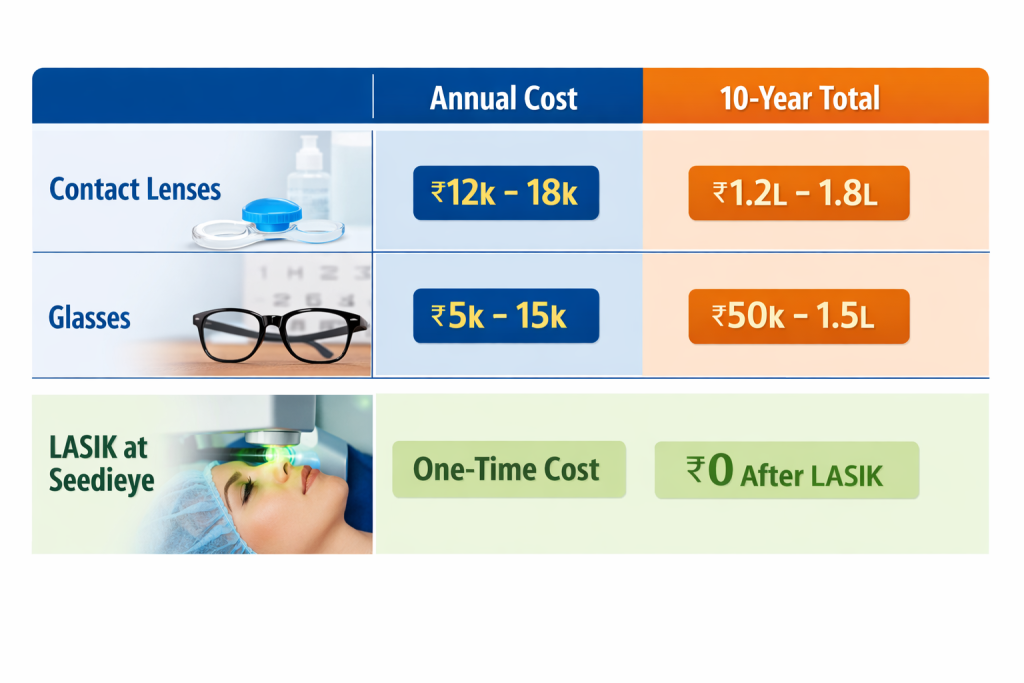
Beyond money, consider the intangible value: freedom from glasses during sports, travel, monsoons, and daily life.
Seedieye Care Centre also offers flexible payment options to make LASIK in Bangalore accessible for more patients.
Myth 10: LASIK Results Are Immediate for Everyone
While many patients walk out of their LASIK procedure with dramatically improved vision, some expect perfect clarity the moment the procedure ends.
When this does not happen immediately, they worry unnecessarily.
The Truth: Full Vision Stabilisation Takes a Few Weeks
The healing process after LASIK is gradual. Initial vision improvement is often remarkable, but the final, stable result requires a few weeks as the cornea settles completely.
- Many patients see clearly within hours and are astounded by the improvement
- Some experience mild fluctuation, blurring, or halos in the first 1–2 weeks; this is normal
- Full stabilisation typically occurs within 2–4 weeks
- Night vision quality (reduced halos and starbursts) improves steadily over 1–3 months
- Follow-up appointments at Seedieye Care Centre ensure your healing is progressing well
Why Do These LASIK Myths Exist?
Understanding where LASIK myths come from is just as important as debunking them.
Misinformation spreads easily, especially in an era of social media and online health forums where personal anecdotes often carry more weight than clinical evidence.
Reasons for Misconceptions
Most LASIK myths originate from a combination of outdated information and genuine fear. Here are the key drivers:
- Outdated information: Early LASIK technology from the 1990s had higher complication rates. Modern LASIK is vastly superior, but old stories persist
- Fear of eye surgery: The idea of a procedure involving the eye triggers visceral anxiety, making people receptive to worst-case stories
- Lack of specialist consultation: Many patients rely on friends’ experiences or internet searches rather than consulting a qualified ophthalmologist
- Misinformation online: Unverified forums, anonymous reviews, and sensational headlines create false impressions of risk
- Rare complications amplified: A single complication story shared widely online can create the impression that bad outcomes are common
At Seedieye Care Centre, patient education is a core part of every consultation. Our specialists take time to address individual concerns, correct misconceptions, and provide evidence-based guidance before any decision is made.
The Reality of LASIK in Bangalore
Bangalore has evolved into one of India’s most advanced cities for eye care.
With a high concentration of technology-driven hospitals and trained ophthalmologists, patients here have access to world-class LASIK in Bangalore, often at a fraction of what the same procedure would cost internationally.
Modern LASIK in Bangalore is performed using the latest bladeless, wavefront-guided laser platforms that customise treatment to the unique contours of each patient’s eye. The result is safer, more precise, and more predictable than ever before.
At Seedieye Care Centre, patients receive:
- Advanced bladeless laser technology for maximum precision
- Comprehensive pre-operative eye evaluation, including corneal topography and pachymetry
- Personalised treatment plans tailored to each patient’s prescription and eye anatomy
- Dedicated post-operative follow-up care to monitor healing
- A transparent, no-pressure consultation environment
How to Know If LASIK Is Right for You
The best way to determine whether LASIK is appropriate for you is through a professional consultation. However, there are some general indicators that suggest you may be a strong candidate.
You May Be a Good Candidate If:
- You are 18 years of age or older
- Your glasses or contact lens prescription has been stable for at least one to two years
- You have no active eye diseases such as keratoconus or severe dry eye
- Your corneal thickness is within the required range for safe reshaping
- You want long-term freedom from glasses and contact lenses
- You are in good general health with no uncontrolled systemic conditions
Even if you do not meet all criteria for standard LASIK, alternatives such as SMILE, PRK, or ICL implantation may still offer the vision freedom you are looking for. A consultation at Seedieye Care Centre will clarify your options.
Not sure which surgery suits you best? Check out LASIK vs PRK: Which Vision Correction Surgery Is Better? for a detailed comparison.
Why Choose Seedieye Care Centre for LASIK in Bangalore?
When it comes to laser eye surgery, the choice of surgeon and centre is as important as the procedure itself.
Seedieye Care Centre has established itself as a trusted name in vision correction across Bangalore, combining clinical expertise with advanced technology and compassionate care.
Key Benefits of Choosing Seedieye Care Centre
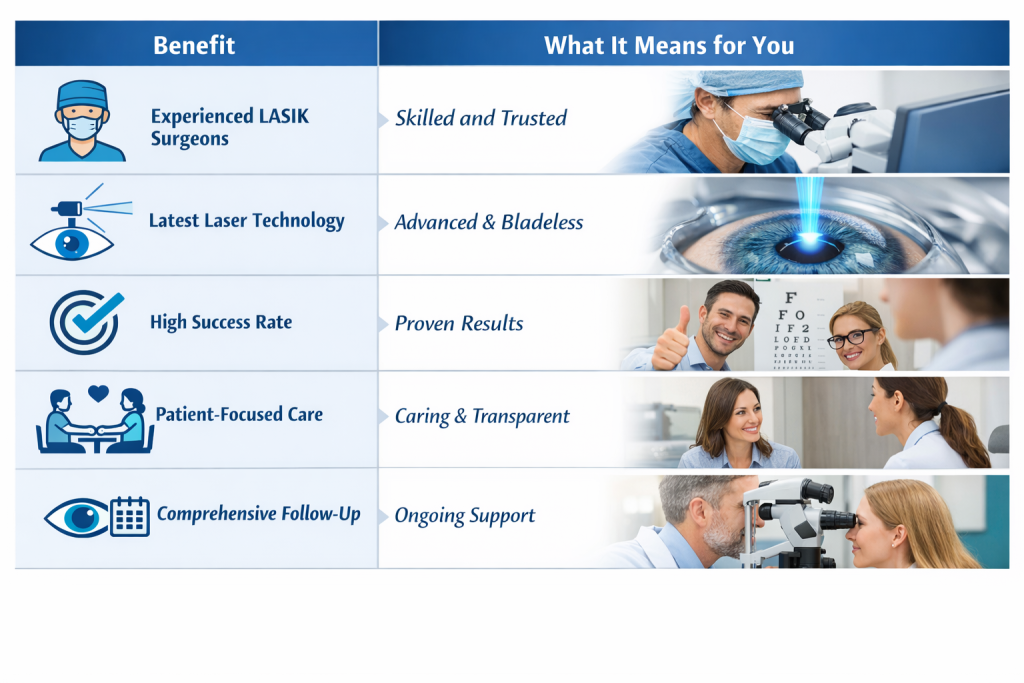
Seedieye Care Centre believes that every patient deserves accurate information and personalised guidance. From your first consultation to your final post-operative review, our team is with you at every step.
Conclusion
LASIK is a safe, effective, and genuinely life-changing procedure, but LASIK myths continue to prevent thousands of Bangalore patients from exploring it. From fears about pain and blindness to misconceptions about recovery and cost, the misinformation surrounding laser eye surgery does a real disservice to people who could benefit enormously.
The LASIK side effects truth, and LASIK risks facts paint a very different picture from what myths suggest: a high-success, low-risk procedure with a fast recovery and results that last. Armed with accurate information, you are in the best possible position to make a confident decision.
If you are considering LASIK in Bangalore, do not let myths make that decision for you. Consult the specialists at Seedieye Care Centre for an honest, personalised assessment of your eyes and your options. Clear vision and a life free from glasses may be closer than you think.
FAQs | LASIK Myths
Is LASIK really safe?
Yes, LASIK is one of the safest elective surgical procedures available today, with a patient satisfaction rate of over 95% and serious complications occurring in fewer than 1% of properly screened patients. Choosing an experienced centre like Seedieye Care Centre reduces risk further.
How long does the LASIK procedure take?
The actual laser treatment takes approximately 20–30 seconds per eye, and the total time in the procedure room, including preparation, is usually 10 to 15 minutes. It is one of the fastest vision correction procedures available.
Can LASIK fail or need to be repeated?
Significant failures are rare, and most outcomes are excellent with proper candidate screening. In a small number of cases, approximately 1–2%, an enhancement procedure may be recommended to fine-tune the result, which is a straightforward process.
Is LASIK worth it in the long run?
For the vast majority of patients, yes, LASIK is considered highly worthwhile both financially and in terms of quality of life. The one-time investment typically pays for itself within 3–5 years compared to ongoing glasses and contact lens costs, and the freedom it provides is valued enormously by patients.