Can Cataracts Cause Blindness If Untreated? – Your vision is one of your most precious senses, and cataracts are silently threatening it for millions of people every day. If you’ve been told you have cataracts, or you’ve noticed blurry vision creeping up on you, one question probably sits at the back of your mind: Can cataracts actually cause blindness?
The answer is yes, and the risk is very real when cataracts go untreated for too long. In this blog, we break down exactly how cataracts progress, what happens to your eyes when they’re left untreated, and why early intervention is the key to protecting your sight for life.
What Are Cataracts?
Before diving into the risks, it’s important to understand what cataracts actually are and how they form inside your eye. Knowing this makes it easier to recognize the warning signs early.
The lens of your eye is normally clear, allowing light to pass through and focus on the retina. Over time, proteins inside the lens begin to clump together, forming cloudy patches; these are cataracts.
As the clumping increases, more and more of your lens becomes hazy, and less light can enter your eye properly.
Key facts about cataract development:
- Cataracts are primarily caused by aging; most adults begin developing them between ages 45–50
- By age 80, the majority of adults have at least some degree of cataracts
- Other causes include diabetes, UV exposure, smoking, steroid medications, and eye injuries
- Cataracts usually develop gradually over years, but certain types can progress much faster
Worried about blurry vision or cloudy eyesight? Read our Early Cataract Signs Guide to discover 7 warning symptoms you should never ignore.
Can Cataracts Cause Blindness?
This is the question most patients are afraid to ask, but it’s the most important one. The short answer: yes, untreated cataracts can and do cause blindness, and cataracts remain one of the leading causes of preventable blindness worldwide.
When cataracts are left untreated, the clouding of the lens becomes so dense that light can no longer reach the retina properly. At an advanced stage, a person may lose the ability to see shapes, recognize faces, or even distinguish between light and dark.
There are two important levels of vision loss to understand:
| Type | What It Means |
| Legal Blindness | Vision loss that meets specific acuity thresholds used for disability classification |
| Functional Blindness | Vision so poor that daily tasks like reading, driving, or navigating become impossible |
Both can result from advanced, untreated cataracts. The good news? Cataract-related blindness is almost entirely preventable and reversible with timely surgery.
How Long Before Cataracts Cause Blindness?
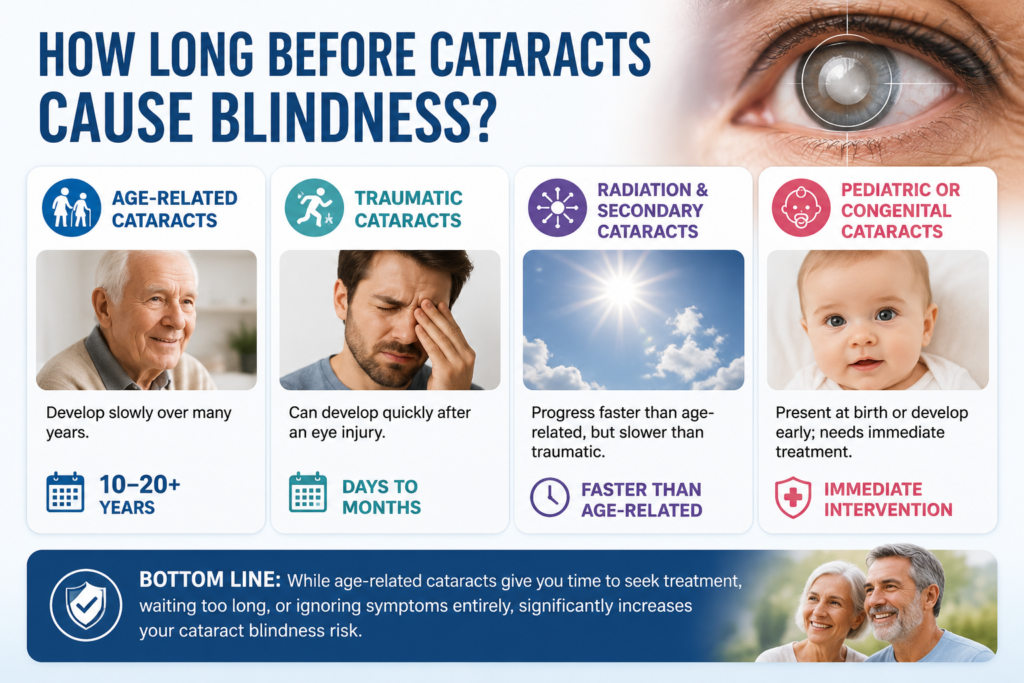
One of the most common questions people ask is: how long can you have cataracts before going blind? The answer depends on the type of cataract and individual factors; there is no single fixed timeline.
Age-Related Cataracts: A Slow, Decades-Long Process
Age-related cataracts (the most common type) usually develop very slowly. They can take 10 to 20 years or more to progress to a stage that causes significant vision loss. In the early stages, symptoms may be so mild that you barely notice them.
Traumatic Cataracts: Rapid Vision Loss
Traumatic cataracts form after a blunt or penetrating eye injury. Unlike age-related cataracts, these can develop within days, weeks, or a few months of the injury, causing much faster vision deterioration.
Radiation and Secondary Cataracts
Cataracts caused by radiation exposure (from prolonged UV exposure or medical treatments) tend to progress faster than age-related ones, though still slower than traumatic cataracts.
Pediatric or Congenital Cataracts
These are present at birth or develop within the first weeks of life. If large enough, they require immediate surgical intervention to prevent permanent visual impairment in children.
Bottom line: While age-related cataracts give you time to seek treatment, waiting too long, or ignoring symptoms entirely, significantly increases your cataract blindness risk.
Signs That Your Cataracts Are Getting Worse
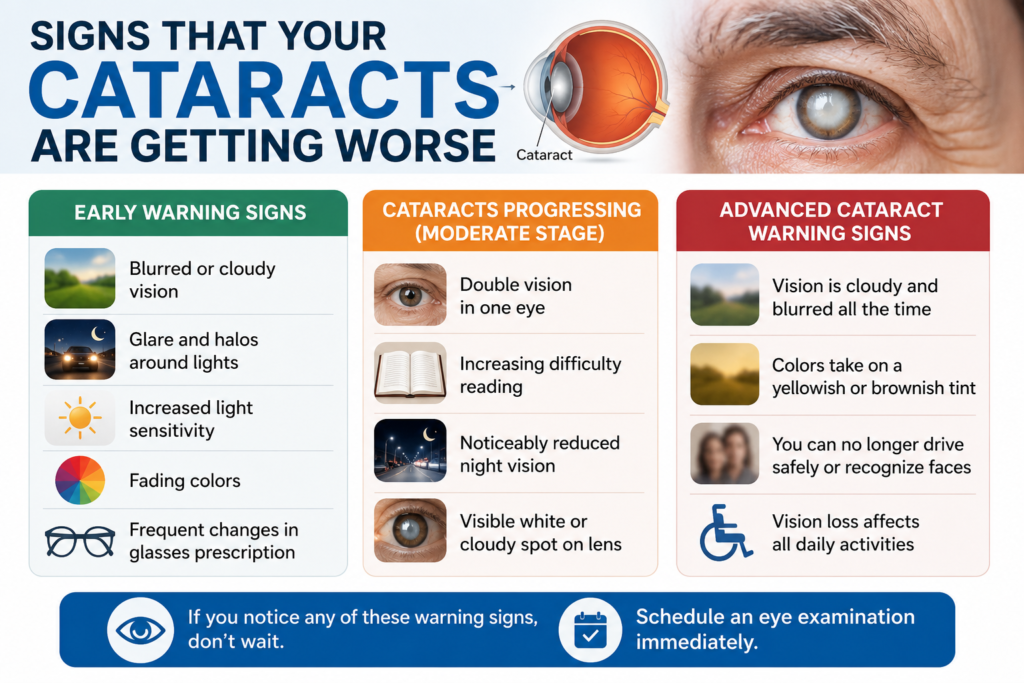
Cataracts often develop so gradually that people mistake the symptoms for normal aging. Recognizing the warning signs early can be the difference between a simple surgery and permanent vision damage.
Early Warning Signs of Cataracts
- Blurred or cloudy vision: Objects appear hazy or out of focus
- Glare and halos around lights, especially at night or when driving
- Increased light sensitivity: Bright sunlight or indoor lighting feels harsh
- Fading colors: Reds, blues, and greens appear muted or washed out
- Frequent changes in glasses prescription, your vision keeps shifting
Signs That Cataracts Are Progressing (Moderate Stage)
- Double vision in one eye
- Increasing difficulty reading, even with glasses
- Noticeably reduced night vision
- Visible white or cloudy spot on the eye lens
Advanced Cataract Warning Signs
- Vision is cloudy and blurred all the time, even with corrective lenses
- Colors take on a yellowish or brownish tint
- You can no longer drive safely or recognize faces
- Vision loss is so severe it affects all daily activities
If you notice any of these warning signs, do not wait. Schedule an eye examination immediately.
Wondering if cataracts can return after surgery? Learn the facts in Can Cataract Come Back After Surgery?, where we break down the most common myths and realities.
What Happens If Cataracts Are Left Untreated?
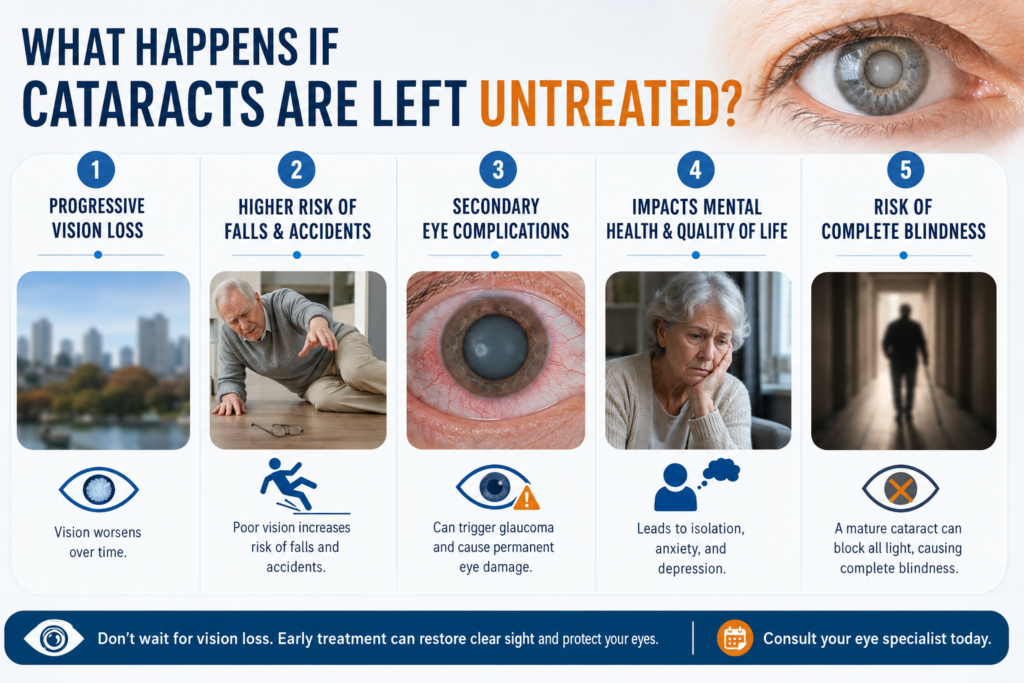
Leaving cataracts untreated isn’t just about blurry vision; the consequences extend well beyond your eyesight. Here’s what can happen when cataracts are ignored:
1. Progressive, Irreversible-Feeling Vision Loss
As the cataract matures and grows denser, light can no longer enter the eye properly. Vision deteriorates from mild blurring to near-total functional blindness over time.
2. Increased Risk of Falls and Accidents
Poor vision from advanced cataracts greatly raises the risk of falls, trips, and road accidents. This is especially dangerous for elderly patients, making untreated cataracts a serious public health concern.
3. Secondary Eye Complications
In some cases, a hypermature (fully matured) cataract can leak proteins into the eye, triggering phacolytic glaucoma, a painful, pressure-related condition that can cause permanent eye damage if not treated promptly.
4. Mental Health and Quality of Life Impact
Vision loss from untreated cataracts doesn’t just affect the eyes. Difficulty reading, socializing, watching television, and moving around independently often leads to isolation, anxiety, and depression, particularly in older adults.
5. Risk of Complete Blindness
At the most severe end of the spectrum, a fully mature (hypermature) cataract can block nearly all incoming light, resulting in complete blindness in the affected eye. While cataract surgery can often still restore vision at this stage, advanced cases carry higher surgical risks.
Cataract Surgery: The Only Proven Cure for Cataracts
No eye drop, supplement, or medication can dissolve or reverse cataracts, surgery is the only effective treatment. The good news is that cataract surgery is one of the safest, most commonly performed procedures in the world, with an extremely high success rate.
How cataract surgery works:
- A small incision is made in the eye
- The cloudy natural lens is broken up using ultrasound (phacoemulsification) and removed
- A clear artificial intraocular lens (IOL) is inserted in its place
- The procedure typically takes under 30 minutes per eye
- Most patients notice significant vision improvement within 24–48 hours
Modern IOL options include monofocal lenses, multifocal lenses, and toric lenses for astigmatism; your eye doctor will recommend the best fit for your lifestyle.
Cataracts are not the only eye condition affecting vision. Explore What Is Retinal Laser Treatment? to understand how modern eye procedures help protect retinal health and prevent vision loss.
Why Choose Seedi Eye Care Centre, Bangalore for Cataract Treatment
When it comes to your vision, you deserve care from specialists who combine advanced technology with genuine compassion.
Seedi Eye Care Centre in Bangalore is a trusted name in comprehensive eye care, offering state-of-the-art cataract diagnosis and surgical treatment tailored to each patient’s needs.
Why patients trust Seedi Eye Care Centre:
- Expert ophthalmologists with extensive experience in cataract surgery and IOL implantation
- Advanced diagnostic equipment for precise cataract evaluation and staging
- Latest surgical techniques including phacoemulsification for minimal discomfort and faster recovery
- Wide range of IOL options, monofocal, multifocal, and toric lenses
- Comprehensive eye health check-ups to detect cataracts and other conditions early
- Patient-first approach with personalized care plans and post-surgery follow-up
Whether you’re experiencing early cataract symptoms or have been living with declining vision for some time, Seedi Eye Care Centre, Bangalore provides the expertise and technology to restore your vision and improve your quality of life.
Don’t let cataracts steal your sight. Book a comprehensive eye examination at Seedi Eye Care Centre, Bangalore today.
How to Reduce Your Risk of Cataract-Related Vision Loss
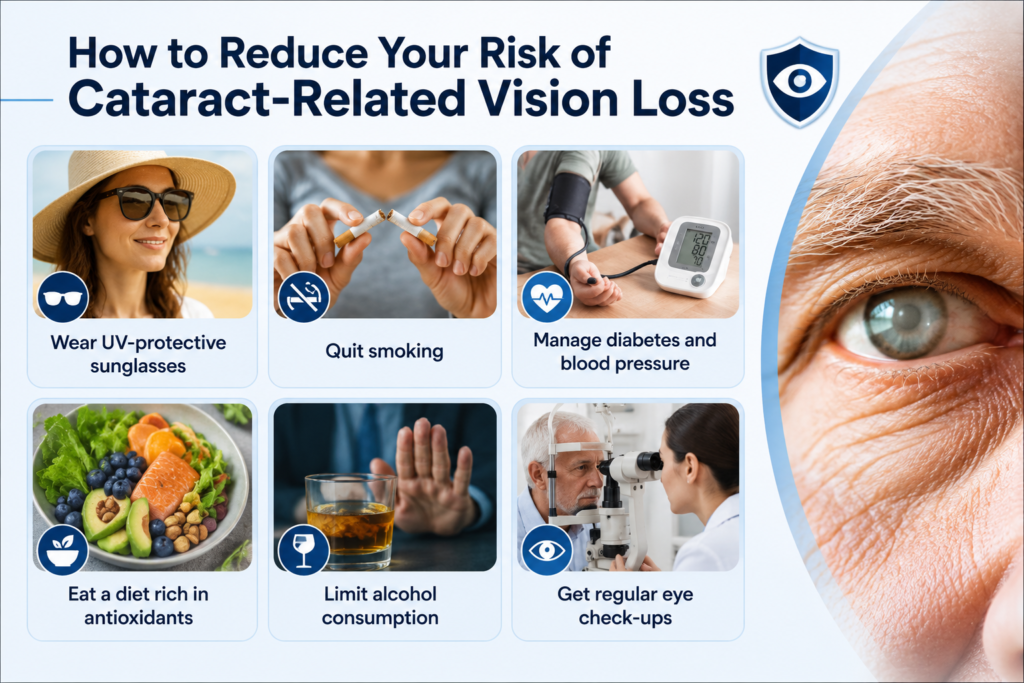
While you can’t entirely stop the aging process, there are practical steps you can take to slow cataract development and protect your long-term vision:
- Wear UV-protective sunglasses whenever you are outdoors
- Quit smoking: Smoking significantly accelerates lens protein damage
- Manage diabetes and blood pressure with regular medical care
- Eat a diet rich in antioxidants: Leafy greens, citrus fruits, and omega-3 fatty acids support eye health
- Limit alcohol consumption
- Get regular eye check-ups, at least once a year after age 40, and more frequently if you have risk factors
Spending long hours on screens every day? Find out whether Blue Light Glasses truly protect your eyes and reduce digital eye strain.
Conclusion: Don’t Wait Until It’s Too Late, Protect Your Vision Today
Cataracts are one of the most common, and most treatable causes of vision loss in the world. But “treatable” does not mean “harmless if ignored.” Left untreated, cataracts can rob you of your independence, your quality of life, and ultimately your sight. The encouraging truth is that with timely cataract surgery, full vision restoration is possible for the vast majority of patients.
If you or a loved one is experiencing any signs of cataracts, don’t delay. Visit Seedi Eye Care Centre, Bangalore for a thorough eye examination and expert guidance, because when it comes to your vision, every day matters.
FAQs
1. Can you go blind with untreated cataracts?
Yes, untreated cataracts can eventually block light from entering the eye and lead to severe vision loss or blindness. Fortunately, cataract-related blindness is usually preventable and treatable with surgery.
2. What hapens if a cataract is left untreated?
An untreated cataract gradually worsens, causing blurry vision, glare sensitivity, and difficulty with daily tasks. In advanced cases, it may also increase the risk of complications like glaucoma.
3. How long before cataracts cause blindness?
Age-related cataracts usually take many years to severely affect vision, while traumatic cataracts can progress much faster. The timeline depends on the type of cataract and overall eye health.
4. How long can cataracts go untreated?
Early cataracts may be manageable for some time with glasses or brighter lighting, but this is temporary. Once vision starts affecting everyday activities, treatment should not be delayed.
5. What are the signs of cataracts getting worse?
Signs include increasing blurry vision, stronger glare or halos at night, faded colors, and difficulty seeing clearly even with glasses. Rapid vision changes should be checked by an eye specialist promptly.